
Last Updated: November 8, 2026
Quick Summary
Yes, most surgical steel contains nickel, and the exact amount depends on the grade. Common grades like 316L and 316LVM contain roughly 10-14% nickel, so surgical steel nickel content is real even when the label sounds clinical. What matters most is the grade and the nickel release rate, not the marketing term.
- Surgical steel is a marketing term, not a regulated grade name, so two pieces can differ completely.
- 316L and 316LVM both contain roughly 10-14% nickel by weight.
- Nickel content is how much nickel is in the alloy; nickel release is how much reaches your skin.
- Scratches, chlorine, harsh cleaners, and sweat can degrade the surface film and increase nickel exposure.
- Ask sellers for the exact alloy and test reports rather than trusting a hypoallergenic label.
Table of Contents
- Does Surgical Steel Contain Nickel? The Short Answer
- What Surgical Steel Actually Is (And Why the Label Is Vague)
- Nickel Content by Grade: 316L, 316LVM, and 440 Series
- Nickel Content vs Nickel Release: Why the Difference Matters
- Surgical Steel Nickel Allergy: Who Reacts and Why
- Is Surgical Steel Hypoallergenic? What the Label Really Means
- Implant Grade vs Surgical Steel: The Specification That Decides
- Surgical Steel vs Titanium for Sensitive Ears
- Frequently Asked Questions
Does Surgical Steel Contain Nickel? The Short Answer
Yes, most surgical steel contains nickel, and the exact amount depends on the grade. Customers often ask this after reacting badly to jewelry before, so here is the honest answer: surgical steel is not one material, and "surgical" is a marketing word, not a specification. The term covers a family of stainless steel alloys, and many of them carry nickel in their composition.
The confusion starts with the name itself. Surgical steel sounds clinical, sterile, and safe for every body. In practice, it describes steel used for surgical instruments, and that steel usually contains nickel. What matters far more than the label is the grade, the nickel release rate, and your own skin sensitivity.
Below, we break down what surgical steel actually is, how much nickel different grades contain, and how to tell whether a piece is safe for your ears.
What Surgical Steel Actually Is (And Why the Label Is Vague)
Surgical steel is a marketing term for stainless steel alloys used in medical instruments and, by extension, body jewelry. It is not a regulated grade name, which is why two pieces labeled "surgical steel" can have completely different compositions.
The term most often refers to 316L stainless steel, a grade that resists corrosion and holds up well against body fluids and cleaning. That corrosion resistance is why it shows up in surgical instruments and medical equipment. But corrosion resistance and nickel-free are two different things. A steel can resist rust beautifully and still contain a meaningful percentage of nickel in its alloy composition.
What most guides miss is that "surgical steel" tells you almost nothing on its own. It does not tell you the grade, the nickel content, or whether the piece has been tested for nickel release. A retailer can apply the label to 316L, to 316LVM, or to a cheaper 440-series alloy, and each behaves differently against sensitive skin.
Nickel Content by Grade: 316L, 316LVM, and 440 Series
Nickel content varies meaningfully by grade, and that variation is the single most useful thing to understand before you buy. Here is how the common grades compare.
| Grade | Typical Nickel Content | Common Use | Nickel-Free? |
|---|---|---|---|
| 316L | Roughly 10-14% | Body jewelry, surgical instruments | No |
| 316LVM | Roughly 10-14% | Implants, medical devices | No |
| 440A/B/C | Low to none in some grades | Cutlery, blades, tools | Varies by grade |
According to Poli International's body jewellery materials and allergy statistics, ASTM F138 316LVM implant-grade stainless steel contains roughly 10-14% nickel by weight. That is a composition figure, not a measurement of how much nickel reaches your skin, and the distinction matters enormously.
316L and 316LVM: The Implant Grades
316L and 316LVM are the grades most often used in body jewelry and medical implants. Both contain nickel in the 10-14% range, but both also form a chromium-oxide surface film that holds most of that nickel in place. A review of nickel-free austenitic stainless steels for medical applications notes that nickel-containing stainless steels in surgical and dental prosthetics remain a contested issue, which is exactly why the grade alone does not settle the allergy question.
If you want a piece that states its exact materials, our Titanium ASTM F136 / 316L Ball Closure PA Ring lists its material options so you can choose the grade that suits your skin.

440A, 440B, and 440C: The Cutlery Grades
The 440 series is a cutlery steel family, harder and often used for blades and tools. Some 440 grades contain little or no nickel, which leads to the misleading claim that all surgical steel is nickel-free. It is not. The 440 family is simply a different alloy with different properties, and it is rarely the grade used for piercing jewelry.
Nickel Content vs Nickel Release: Why the Difference Matters
Nickel content is how much nickel sits inside the alloy. Nickel release is how much nickel actually escapes onto your skin. These are not the same number, and conflating them is the most common mistake in this whole conversation.
A steel can contain 10-14% nickel and release almost none of it, provided the surface film stays intact. Sources such as Nickelsafe UK's guide to allergy-free metals describe nickel in surgical and stainless steel as bound within the alloy, releasing no nickel ions onto skin.
What changes the release rate is wear and care. Scratches, chlorine, harsh cleaners, and prolonged skin contact against sweat can all degrade the surface film and increase nickel exposure over time. A piece that felt fine for months can start to irritate after the coating wears or the metal gets scratched.
Watch out: a PVD coating on a 316L piece can reduce direct skin contact, but once it chips, the underlying alloy is exposed again.
Surgical Steel Nickel Allergy: Who Reacts and Why
Nickel is one of the most common metal sensitizers, and a surgical steel nickel allergy is a contact allergy, not a metal "poisoning." Once your immune system is sensitized to nickel ions, even small amounts reaching the skin can trigger redness, itching, and irritation at the piercing site.
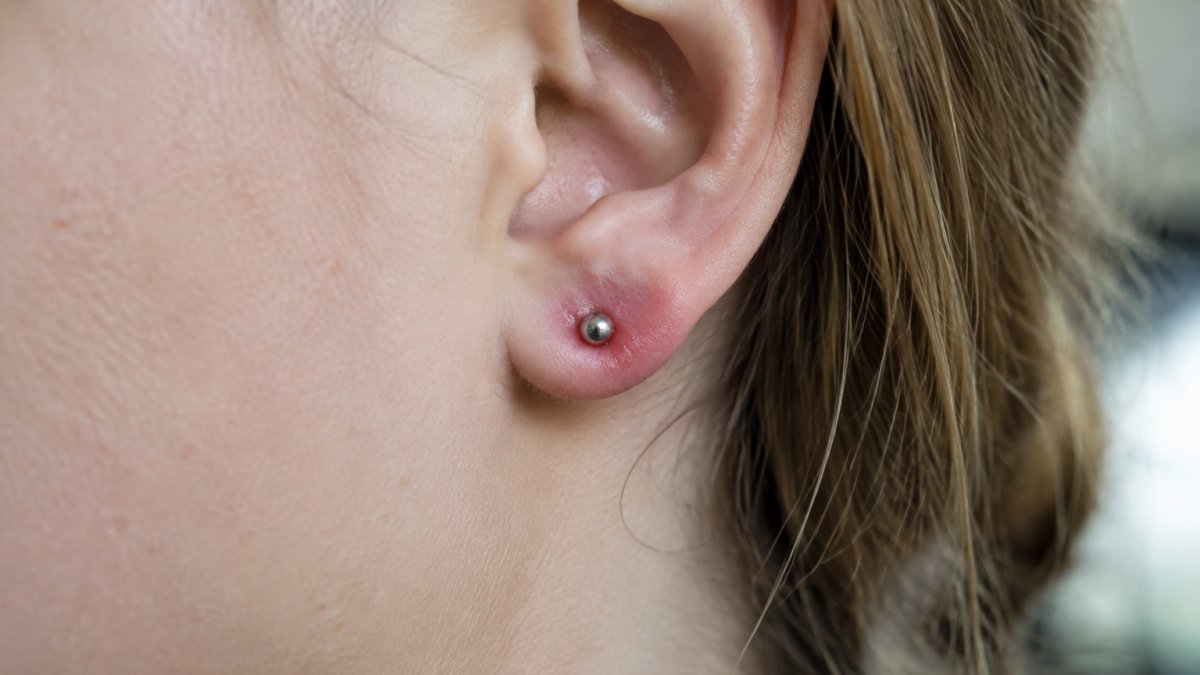
Not everyone reacts. If you have reacted to cheap jewelry before, our material and safety guide explaining why cheap body jewelry irritates skin walks through the common culprits.
If you suspect a nickel allergy, the practical move is to stop wearing the piece, let the skin settle, and switch to a material that does not release nickel. A dermatologist or piercer can help confirm what is triggering the reaction.
Practical Guidance for Confirmed Nickel Allergy
If you have already been diagnosed with a nickel allergy, the goal shifts from "is surgical steel safe?" to "how do I minimize exposure?" Here is a cautious, step-by-step approach that most dermatologists and experienced piercers would recognize.
First, treat any unverified "surgical steel" as a potential source of nickel until proven otherwise.
Second, prioritize materials with a documented low release rate. Implant-grade titanium (ASTM F136) is a material option for sensitive individuals because it does not contain nickel in the same way stainless steel does.
Third, patch-test before committing to a new piece.
Watch out: a reaction can be delayed. Nickel allergy symptoms sometimes appear 12-48 hours after exposure, so a piece that feels fine immediately after insertion may still cause irritation later. Do not assume safety based on the first hour.
Finally, if you have a confirmed allergy and are considering a new piercing or jewelry change, consult a clinician or a professional piercer with experience in metal sensitivities.
Is Surgical Steel Hypoallergenic? What the Label Really Means
Surgical steel is not reliably hypoallergenic. "Hypoallergenic" has no legal or technical definition in jewelry, so any brand can print it on a listing without testing a single piece.
What the label should mean is "less likely to cause a reaction," and that depends on the grade, the nickel release rate, and your own sensitivity. A 316L piece with an intact surface film may suit many wearers. A scratched, coated, or cheaply finished steel piece may irritate the same person. The word on the box does not tell you which you have.
For shoppers confused by these labels, our guide to durable body jewelry for sensitive skin explains what to look for beyond the marketing claim. The short version: ask for the grade, ask for the material specification, and treat "hypoallergenic" as a starting point rather than a guarantee.
How to Verify a "Hypoallergenic" or "Nickel-Free" Claim
Because the label itself is unregulated, verification has to come from documentation and specific questions. Here is what to look for and what to ask.
Look for test reports, not just labels. Nickel release is often assessed against European standards such as EN 1811.
Understand the limits of "nickel-free." In many jurisdictions, "nickel-free" is not a regulated term for jewelry.
Check for coatings and their durability. A PVD coating or plating can reduce nickel release initially, but once it chips or wears through, the underlying alloy is exposed.
Consider the use case. A piece intended for a fresh piercing or long-term wear has different risk than a piece worn occasionally.
Watch out: a seller who claims "hypoallergenic" but cannot name the grade or provide a test report is asking you to take their word for it.
Implant Grade vs Surgical Steel: The Specification That Decides
Implant grade is a specification, while surgical steel is a description. That single difference is what separates a piece you can trust from one you cannot.
Implant-grade materials are made to a named standard. ASTM F136 covers implant-grade titanium, and ASTM F138 covers 316LVM stainless steel for implants. A piece made to those standards has a documented composition and a tighter manufacturing tolerance. "Surgical steel" carries no such standard, so it can mean almost anything within the stainless steel family.
If you are weighing titanium against steel, our guide on how to identify implant-grade titanium shows the practical checks, including the ASTM F136 marking and how a listing should state its material. That verification step is the difference between buying on a label and buying on a specification.
Surgical Steel vs Titanium for Sensitive Ears
Titanium is generally considered a safer choice for sensitive ears, and implant-grade titanium is one option for people with a confirmed nickel allergy. ASTM F136 titanium is lightweight and does not contain nickel in the way stainless steel does.
Surgical steel still has a place. It is durable, affordable, and fine for many wearers with no sensitivity. The problem is that it is a gamble for reactive skin, and a reaction usually shows up after you have already paid for the piece.
If you are weighing titanium as your alternative, our article on whether implant-grade titanium is nickel-free answers the question directly before you commit. For most sensitive ears, the trade-off is simple: pay a little more for a known material, or save money and risk irritation.
Nickel sensitivity is not something to guess at with your ears.
Frequently Asked Questions
Is surgical steel ok for a nickel allergy?
It depends on the grade and your sensitivity level. Most surgical steel contains nickel, typically 8-14% in 316L and 316LVM. A chromium-oxide film holds most of that nickel in place, so many people with mild sensitivity wear it without a reaction. If you have a confirmed nickel allergy, patch-tested by a dermatologist, implant-grade titanium or 14k gold is the safer choice because titanium contains no nickel at all.
Can you become allergic to surgical steel after wearing it for years?
Yes. Nickel allergy is a sensitizer, meaning repeated exposure can trigger a reaction in someone who never reacted before. A piercing is a common entry point because the jewelry sits in an open wound during healing. If a piece you have worn for years suddenly causes itching, redness or flaking, stop wearing it and switch to titanium or gold while the skin settles.
Which is better for sensitive ears, titanium or surgical steel?
Implant-grade titanium is the better choice for sensitive ears. ASTM F136 titanium contains no nickel, weighs less and resists corrosion. Surgical steel 316L contains nickel and relies on a surface film to limit release, which can break down with sweat, scratches or cheap plating. If you want the look of gold, 14k solid gold is the other nickel-free option worth considering for long-term wear.
Is 100% stainless steel nickel-free?
No. Stainless steel is an alloy, so it is never 100% one metal. Austenitic grades like 316L and 316LVM contain nickel to hold their structure, usually 10-14% by weight. Ferritic grades contain little or none but are rarely used for body jewelry. The only truly nickel-free options for piercings are titanium, niobium, and solid gold, so check the grade specification rather than the word stainless.
