
Table of Contents
- Why Cheap Body Jewelry Irritates Your Piercing
- Nickel Allergy From Body Jewelry: The Most Common Culprit
- Implant-Grade Titanium for Piercings: A Safer Alternative
- Is 14K Gold Safe for Piercings? Why Quality Matters
- Piercing Irritation vs Infection: What You Need to Know
- Fresh vs Healed Piercings: Why Cheap Jewelry Is Especially Risky During Healing
- What to Do If Your Piercing Becomes Irritated
- Frequently Asked Questions
Last Updated: October 13, 2026
Why Cheap Body Jewelry Irritates Your Piercing
When you buy cheap body jewelry, you're often getting metals that weren't designed for skin contact. Many customers experience irritation, redness, and swelling after wearing low-quality pieces.
Cheap jewelry irritates because of how it's made. Mass-produced pieces use metal alloys and plating methods that break down quickly. When these materials touch your skin, especially in a fresh or healing piercing, reactions happen fast.
The metals in inexpensive jewelry oxidize, release particles, and interact with your body's moisture and chemistry. This creates the perfect storm for irritation, allergic reactions, and prolonged healing.
Low-Quality Metal Composition and Oxidation
Cheap body jewelry typically contains base metals like nickel, copper, and iron mixed into alloys. These metals aren't stable when exposed to skin, sweat, and body heat.
Oxidation is the main culprit. When metals oxidize, they corrode and release particles that irritate the delicate skin inside your piercing. This process accelerates in warm, moist environments, exactly what your piercing provides.
The coating on cheap jewelry (often thin plating) wears away quickly. Once it does, the base metal underneath is exposed directly to your skin. This is when most irritation begins.
Moisture, Sweat, and Chemical Reactions
Your body creates the perfect environment for cheap metals to cause problems. Sweat, oils, and natural moisture accelerate corrosion. Every time you shower, exercise, or even just live your daily life, your piercing is exposed to moisture.
Chemical reactions happen when these metals meet your skin's natural acids and salts. The combination creates an ideal condition for the metal to break down faster.
Temperature changes matter too. When you move between hot and cold environments, the metal expands and contracts. This movement can cause micro-scratches in the coating, exposing the base metal underneath even faster.
Nickel Allergy From Body Jewelry: The Most Common Culprit
Nickel is the leading cause of metal allergies worldwide (pubmed.ncbi.nlm.nih.gov). Most cheap body jewelry contains nickel because it's inexpensive and easy to work with. If you have sensitive skin or a nickel allergy, cheap jewelry will trigger a reaction almost immediately.
The problem is that nickel allergies can develop over time. You might wear cheap jewelry for months without issues, then suddenly develop a reaction. Your immune system can become sensitized to nickel through repeated exposure.
How Nickel Causes Contact Dermatitis
When nickel touches your skin, it can trigger contact dermatitis in people who are sensitive or allergic. This isn't a true allergy in the traditional sense, it's a localized skin reaction.
Contact dermatitis from nickel typically appears as itching, redness, and a rash around the piercing. The reaction can spread beyond the immediate area. In severe cases, the skin becomes swollen, blistered, and painful.
The reaction develops because your skin recognizes nickel as a threat. Your immune system responds by triggering inflammation. Each time you wear nickel jewelry, the reaction gets worse.
Other Metal Allergens in Inexpensive Jewelry
Nickel isn't the only problem metal in cheap jewelry. Copper, cobalt, and chromium also cause allergic reactions. Many people don't realize they're allergic to these metals until they wear cheap jewelry.

Copper oxidizes quickly and can cause a green discoloration on your skin. While this is usually just staining, it indicates the metal is breaking down.
Mixed metal alloys in cheap jewelry create unpredictable reactions. You might be fine with one piece and have a severe reaction to another, even if both are labeled the same way.
Implant-Grade Titanium for Piercings: A Safer Alternative
If cheap jewelry keeps irritating your piercing, implant-grade titanium is worth considering. This material is biocompatible, meaning your body tolerates it well. Titanium doesn't oxidize or corrode, so it won't release particles into your piercing.
Implant-grade titanium must meet ASTM F136 standards. This specification ensures the titanium is pure enough for body contact. Lower-grade titanium contains impurities that can still cause reactions.
Titanium is lightweight and durable. It won't tarnish, discolor, or break down over time. For fresh piercings and sensitive skin, titanium is one of the best choices available.
Is 14K Gold Safe for Piercings? Why Quality Matters
Solid 14k gold is one of the safest metals for body jewelry. It doesn't oxidize, doesn't corrode, and doesn't release particles.
The key word is solid. Gold-plated or gold-filled jewelry isn't the same as solid gold. Plating wears away, exposing the base metal underneath. Once that happens, you're back to dealing with cheap metal irritation.
At Pierced and Lovely, all our 14k gold pieces are solid gold, not plated. For example, our 14K Solid Gold Internal Labret Lip Piercing is hallmarked by the UK Birmingham Assay Office, guaranteeing its purity.
14k gold is durable enough for everyday wear. It won't scratch easily, and it maintains its appearance for years. For healed piercings, solid 14k gold offers both safety and elegance.
Hallmarking and Verification: How to Know What You're Buying
Hallmarking is your best tool for verifying gold quality. In the UK, all gold jewelry over 1 gram must be hallmarked by an Assay Office (Hallmarking: practical guidance - summary).
When you see a hallmark, you know the gold has been tested and verified. The mark shows the purity (14k, 18k, etc.), the maker's mark, and the assay office that tested it.
14K Gold Internally Threaded Tongue & Nipple barbell piercing | 14G 16G →
Reputable sellers always list the weight of their gold jewelry. If a seller doesn't mention weight, ask. Genuine sellers are transparent about this because weight directly affects price.
| What to Check | Why It Matters | Red Flag |
|---|---|---|
| Hallmark present | Proves purity was tested | No hallmark on jewelry over 1g |
| Weight listed | Shows you the actual amount of gold | Weight not mentioned |
| Maker's mark visible | Identifies the seller for accountability | Unmarked or unclear marks |
| Assay office stamp | Confirms independent verification | Unknown or missing assay mark |
Piercing Irritation vs Infection: What You Need to Know
Not every irritated piercing is infected. Understanding the difference helps you respond correctly. Irritation from cheap jewelry and actual infection require different treatments.
Irritation is your skin's reaction to the material touching it. Infection is a bacterial or fungal growth inside the piercing. Both cause redness and discomfort, but they need different solutions.
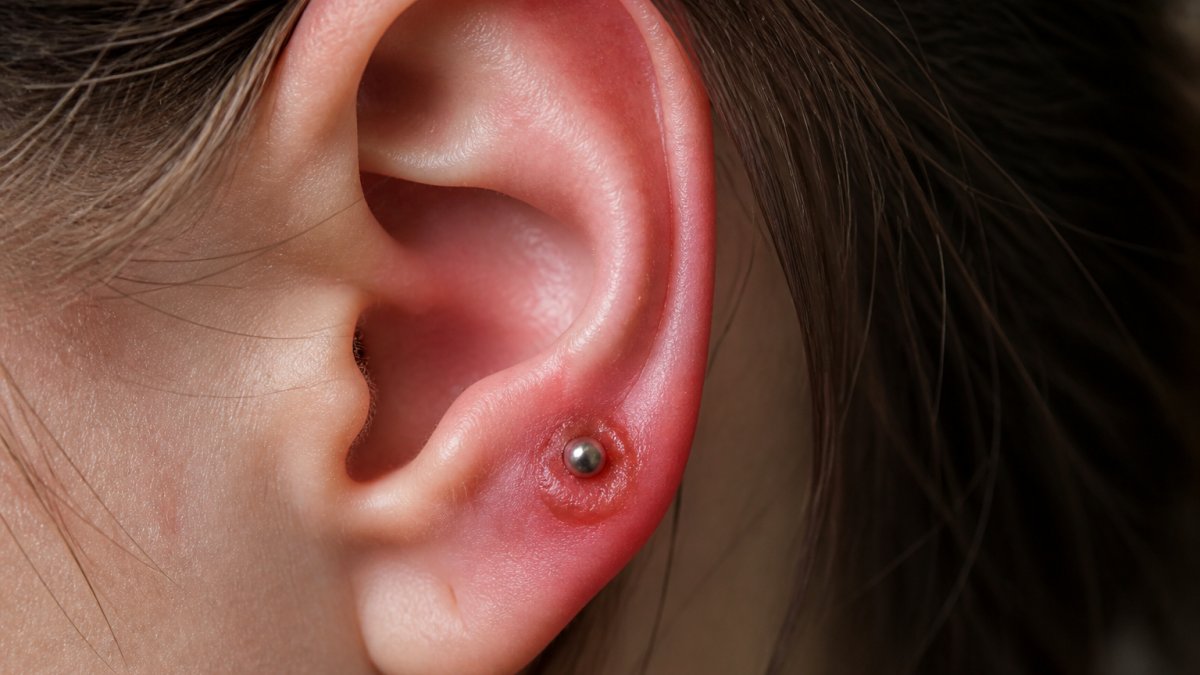
Signs of Metal Irritation and Allergic Reaction
Metal irritation typically appears as redness, itching, and mild swelling around the piercing. The area might feel warm to the touch. You might notice discharge that's clear or slightly colored, but not pus.
Allergic reactions look similar but often spread beyond the immediate piercing area. The rash might extend up your ear or down your neck. Itching is usually more intense with allergies.
These symptoms usually appear within hours or days of wearing new cheap jewelry. They improve quickly once you remove the jewelry and switch to a safer material.
Common signs of metal irritation:
- Redness around the piercing
- Itching or burning sensation
- Mild to moderate swelling
- Clear or slightly discolored discharge
- Symptoms improve when jewelry is removed
When to Seek Medical Attention
Infection looks and feels different from irritation. Watch for pus, severe swelling, warmth, and fever. If your entire ear or the area around your piercing is hot to the touch, see a doctor.
Infections develop when bacteria enter the piercing. This can happen if the jewelry is dirty or if you've been touching the piercing with unwashed hands. Infections require antibiotics and professional care.
Seek medical attention if you experience:
- Pus or thick, colored discharge
- Severe swelling that limits movement
- Fever or chills
- Red streaks extending from the piercing
- Pain that worsens instead of improves
- Symptoms lasting more than a few days after removing jewelry
Don't wait if you suspect infection. The sooner you get treatment, the better the outcome. An untreated infection can cause serious complications.
Fresh vs Healed Piercings: Why Cheap Jewelry Is Especially Risky During Healing
Fresh piercings are incredibly vulnerable. The wound is open, the skin is inflamed, and your body is working hard to heal.
During healing, your piercing needs stability and biocompatible materials. Cheap jewelry causes constant irritation that slows healing.
Fresh piercings need implant-grade titanium or solid 14k gold. These materials won't interfere with healing. Cheap metals will trigger inflammation and increase your risk of complications.
Healed piercings are more forgiving. The skin has closed and strengthened. You have more flexibility in what you can wear.
The safest approach is to start with quality jewelry and keep wearing it.
What to Do If Your Piercing Becomes Irritated
If your piercing is irritated, the first step is to identify the cause. Is it the jewelry, or something else?
Stop touching your piercing. Hands introduce bacteria and can make irritation worse. Let the area air dry after cleaning. Avoid makeup, lotions, and other products around the piercing.
If you've been wearing cheap jewelry, replace it immediately with implant-grade titanium or solid 14k gold. This alone often resolves irritation within a few days.

Keep the area clean but don't over-clean. Saline solution once or twice daily is enough. Harsh soaps and excessive cleaning can delay healing.
If irritation persists after removing cheap jewelry and switching to a safer material, see a professional. You might have developed a sensitivity to another metal, or there might be an underlying issue. A piercer or dermatologist can help identify the problem.
Cheap body jewelry irritates because it's made from materials that weren't designed for skin contact. Browse our 14K Solid Gold Cartilage Helix Barbell and other premium pieces to find jewelry that feels as good as it looks.
Frequently Asked Questions
Why does cheap body jewelry irritate piercings more than quality pieces?
Cheap body jewelry often contains nickel, copper, and iron alloys that oxidize when exposed to moisture and sweat. This oxidation releases metal ions that trigger contact dermatitis and skin irritation. Higher-quality materials like implant-grade titanium and 14K gold resist oxidation, preventing the chemical reactions that cause redness, itching, and swelling. Additionally, inexpensive jewelry is rarely tested for allergen content, so you have no guarantee of material purity.
How can I tell if my piercing has a nickel allergy from body jewelry or just irritation?
A nickel allergy typically causes itching, redness, and a rash that develops within 24-48 hours of wearing the jewelry and improves when you remove it. General irritation from friction, pressure, or poor aftercare causes localized swelling and tenderness around the piercing site but usually responds to saline soaks and proper cleaning. If symptoms persist after switching to hypoallergenic jewelry and the piercing is fully healed, you likely have a metal allergy. Infection involves heat, pus, and systemic symptoms like fever, seek medical care if you suspect infection.
Is implant-grade titanium for piercings really better than stainless steel?
Yes. Implant-grade titanium (ASTM F136) is biocompatible and hypoallergenic because it doesn't contain nickel or other allergens. It resists oxidation even in moist environments, making it ideal for sensitive skin and fresh piercings. Surgical stainless steel often contains small amounts of nickel and can still cause reactions in sensitive individuals. Titanium is also lighter and more comfortable for extended wear, which is why it's the material of choice for people with known metal sensitivities.
Why is 14K gold safe for piercings when cheaper gold-plated jewelry isn't?
14K gold is 58% pure gold mixed with other metals in controlled ratios, and reputable sellers hallmark it to verify authenticity. This consistency ensures predictable material composition. Gold-plated jewelry has a thin gold coating over a base metal core, usually nickel-containing alloy. The plating wears away with daily wear, exposing the allergenic base metal underneath. Additionally, 14K gold doesn't oxidize, whereas the base metals in plated jewelry corrode when exposed to sweat and moisture, triggering irritation and allergic reactions.