
Quick Summary
Handmade vs mass produced jewelry comes down to production method, price, uniqueness and durability, and neither is automatically better. Handmade pieces are finished individually and often customizable but cost more, while mass-produced pieces are cheaper and consistent but offer little variation.
- Handmade pieces are finished one at a time, so slight variation between pieces is normal.
- Mass-produced pieces are usually cheaper and easier to replace quickly.
- Handmade status does not guarantee durability; materials and joint construction matter more.
- Check solder joints, finishing, symmetry and hallmarks rather than trusting the label alone.
- Ask sellers about materials, sizing, and repair options before comparing prices.
Table of Contents
- Handmade vs Mass Produced Jewelry: A Side-by-Side Comparison
- How Each Production Process Works
- How to Tell If Jewelry Is Handmade
- Handmade Jewelry Quality, Durability and Repair
- Materials Behind Handmade Jewelry: 14K Gold and Implant-Grade Titanium
- Price, Uniqueness and the Benefits of Handmade Jewelry
- Choosing Your Next Piece: Which Option Fits Your Situation
- Frequently Asked Questions
Handmade vs Mass Produced Jewelry: A Side-by-Side Comparison
Last Updated: November 12, 2026
Handmade vs mass produced jewelry is one of the first choices a shopper faces when buying body jewelry, and it shapes price, fit and how long a piece lasts. At Pierced and Lovely, we make the case for handcrafted pieces in 14K gold and implant-grade titanium, but we also believe you should know where mass-produced options win. Handmade jewelry is a craft-based product made by hand, in small batches, with each piece finished individually.
Global Insight Services estimated the handmade jewelry market at USD 203.8 billion in 2024, with forecasts reaching USD 594.3 billion by 2034 (Global Insight Services handmade jewelry market estimate). A separate forecast from Custom Market Insights put the 2024 market at USD 158 billion (Custom Market Insights handmade jewellery forecast). These figures show demand for handmade pieces is growing, but they do not measure quality, so the rest of this guide looks at what actually differs.
Here is the short version. Handmade pieces can offer uniqueness and, in some cases, custom options. Mass-produced pieces usually cost less and are easier to find in a hurry. Neither is automatically better. Handmade does not guarantee durability, and mass-produced does not guarantee poor quality. The table below compares the two across the factors most shoppers weigh.
| Factor | Handmade | Mass Produced |
|---|---|---|
| Production | Small batches, individual finishing | Repeatable runs, standardized designs |
| Uniqueness | Slight variation between pieces | Identical copies |
| Customization | Often available to order | Usually limited to existing designs |
| Price | Typically higher | Typically lower |
| Quality control | Depends on the maker | Depends on the manufacturer |
| Best for | Specific fit, gifts, collectors | Budget buys, quick replacements |
How Each Production Process Works
Handmade jewelry is shaped, soldered, set and polished by a person working at a bench. The maker decides the wire gauge, checks the fit against the body and finishes each surface before it leaves the studio.
Mass production relies on molds, casting or stamping, and machine polishing. A design is tested once, then repeated across hundreds or thousands of units. This keeps sizes consistent and costs low, which is why mass-produced pieces dominate budget and fashion lines.
For body jewelry, the practical difference is what happens at the finishing stage. Handmade barbells and loose parts are typically finished by hand, one piece at a time. Neither method is wrong, but the finishing stage explains many of the differences in comfort and appearance you will notice.
How to Tell If Jewelry Is Handmade
Handmade jewelry often shows small signs of human work: slight asymmetry, tool marks that have been polished out but not removed entirely, and minor differences in curve between matching pieces. Mass-produced pieces tend to look identical in every detail. But appearance alone is weak evidence, because a skilled maker can finish a piece to look nearly machine-perfect, and a mass-produced piece can be hand-polished at the end of the line. The reliable approach is to inspect specific features and ask for documentation, rather than trusting the label.
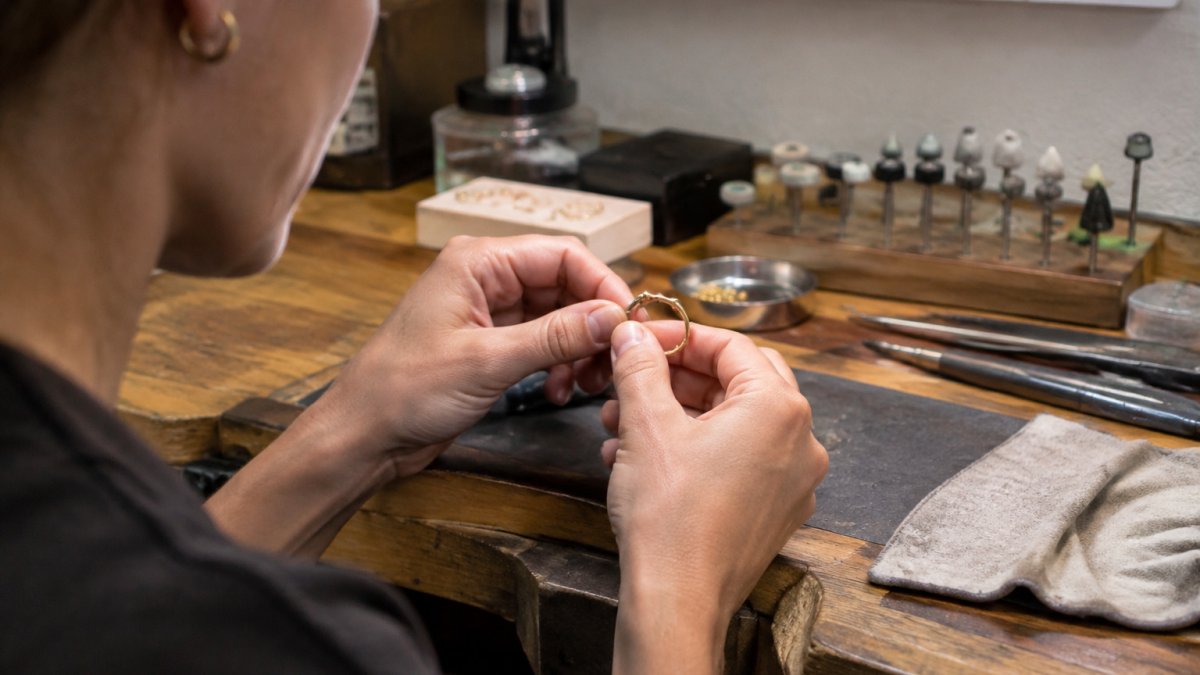
A practical inspection checklist
Use the same checks whether you are holding the piece in a shop or judging product photos. Where a photo cannot show a feature, ask the seller for a close-up or a short video.
- Settings. Look at how the stone or end is held. Hand-set prongs are usually adjusted individually and may sit at slightly different angles; machine-set prongs are uniform but can be over-tightened. Check that no prong is lifted, crushed or sitting on the stone's table. On body jewelry, check that the threaded or push-fit connection is clean and engages without wobble.
- Solder joints. A sound joint is smooth, fully fused and finished flush with the surrounding metal. A weak joint shows a visible seam, a pit, or a color change where the solder flowed. Run a fingernail gently across the joint; a catch or ridge suggests incomplete finishing.
- Finishing. Look for consistent polish in recessed areas, not just on the outer face. Hand-finished pieces often show slightly softer edges; mass-finished pieces can show buffing marks in one direction or a mirror shine that hides tool marks. Check the inside of rings, the backs of ends, and the area around threads.
- Symmetry. Compare matching elements: two ends of a barbell, two sides of a curved piece, the spacing of a spiral. Small variation is normal in handmade work; a piece that is visibly lopsided in a way that affects fit is a construction problem, not a charm.
- Hallmarks and stamps. Check for a maker's mark, metal purity mark and, where required, an assay office mark. In the UK, gold jewelry over 1.0g must be hallmarked by an Assay Office. A stamp alone is not proof, but a missing stamp on a piece that should carry one is a reason to ask questions.
- Documentation. Ask for the material specification, the gauge and length, the maker or studio name, and care instructions. A seller who can answer these questions precisely is more credible than one who repeats "handmade" without detail.
Watch out: a maker's mark or hallmark confirms metal content and origin, not production method. A mass-produced piece can be hallmarked, and a handmade piece can be sold without a mark in markets where it is not required.
What photos can and cannot tell you
Product photos are useful for spotting obvious asymmetry, rough finishing or mismatched pairs, but they rarely show solder joints, thread quality or the inside of a setting. Ask for a close-up of the joint and the connection point, and for a photo of the hallmark. If a seller cannot provide these, treat the "handmade" claim as unverified rather than false.
Questions that separate makers from resellers
A short exchange with the seller often reveals more than any label. Ask who makes the piece, where the metal is sourced, whether custom sizes are available, and how a repair would be handled. A maker can usually answer specifically; a reseller often cannot. None of these answers proves quality on its own, but together they show whether the "handmade" description is backed by a real production process.
Handmade Jewelry Quality, Durability and Repair
Handmade quality depends on the maker's skill, the materials chosen and how carefully the piece is finished. Handmade status alone does not establish longevity. Durability comes from materials and construction. Mass-produced jewelry can also last well when it is made from solid metal and has sound joints, and cheap plating wears through quickly regardless of how it was made.
Where durability actually comes from
Three construction details matter more than the production label. First, the base metal: solid 14K gold and implant-grade titanium resist wear and corrosion far better than plated brass or generic "surgical steel." Second, the joint: a fully fused solder joint or a properly machined thread outlasts a glued or press-fit connection. Third, the finish: over-polished edges thin the metal and create weak points, while a consistent finish protects the surface. Ask about all three before you compare price.
Repairability and lifetime ownership cost
Purchase price is only the first cost. Over years of wear, the cheaper piece can become the more expensive one if it cannot be repaired.
- Resizing. Ask whether resizing is offered and who performs it.
- Cleaning and maintenance. Ask for the maker's cleaning guidance, especially for threaded or push-fit body jewelry.
- Warranties and service. Policies vary widely. A written warranty is more useful than a verbal promise.
A common pattern is that handmade pieces cost more upfront but offer a lower lifetime cost for buyers who keep and repair jewelry, while mass-produced pieces win on first price and replacement speed. Neither pattern is universal, so compare the specific piece and the seller's service terms.
A fair note on manufacturing methods
Handmade, cast, CAD-designed and machine-finished processes overlap. A maker may design by hand, cast from a mold and finish by hand; a factory may use hand polishing on a standardized design. Production method alone does not determine quality. Judge the piece by its materials, construction, finishing and the seller's documentation, and use the inspection checklist above to test those claims.
Whatever you buy, wait until your piercing has fully healed before changing jewelry. Our listings note that the body jewelry is suitable for healed piercings only.
Materials Behind Handmade Jewelry: 14K Gold and Implant-Grade Titanium
Materials matter more than production method for anyone with sensitive skin. 14K gold is an alloy containing gold mixed with other metals for strength. Implant-grade titanium is a medical-grade material used for body jewelry.
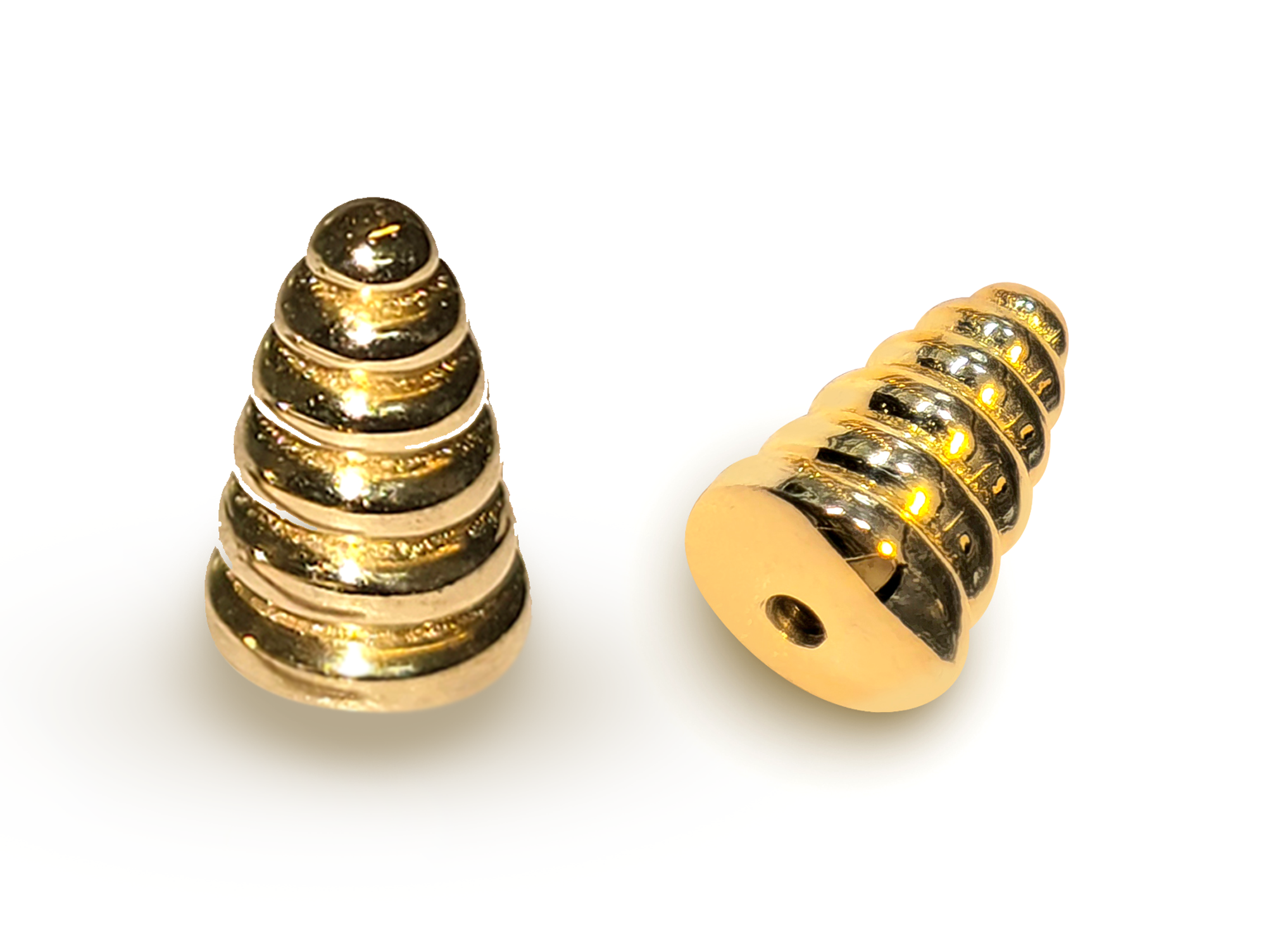
Our 14K gold pieces are hallmarked by the UK Birmingham Assay Office. Our implant-grade titanium jewelry is implant-grade ASTM F136 titanium (F136 Standard Specification for Wrought Titanium-6 Aluminum-4 Vanadium ELI (Extra Low...). For example, the 14K Gold Piercing Loose Part 16G Tapered Spiral Layer Design, handmade with a tapered spiral layer and sold at 370.30, shows how a single handcrafted part is built. Browsing the wider range of labrets in implant-grade titanium and 14K gold lets you compare the same materials across designs.
Whatever you buy, wait until your piercing has fully healed before changing jewelry. Our listings note that the body jewelry is suitable for healed piercings only.
Price, Uniqueness and the Benefits of Handmade Jewelry
Handmade pieces are generally priced higher than mass-produced alternatives.
Price is not the whole story. The benefits of handmade jewelry include:
- Fit: Bespoke gold orders are available for a tailored fit.
- Materials: Our 14K gold is hallmarked and our titanium is implant-grade.
Our 14K Solid Gold Belly Button Ring is priced at 426.00.
Choosing Your Next Piece: Which Option Fits Your Situation
Choose handmade if you want a specific size, a custom design, solid gold or titanium with clear documentation, or a piece that feels personal. Choose mass-produced if you need a low-cost replacement, want to try a new piercing style, or are buying for someone and budget is the main limit.
For everyday wear at work, look for discreet designs in solid metal such as our discreet gold jewelry for work.
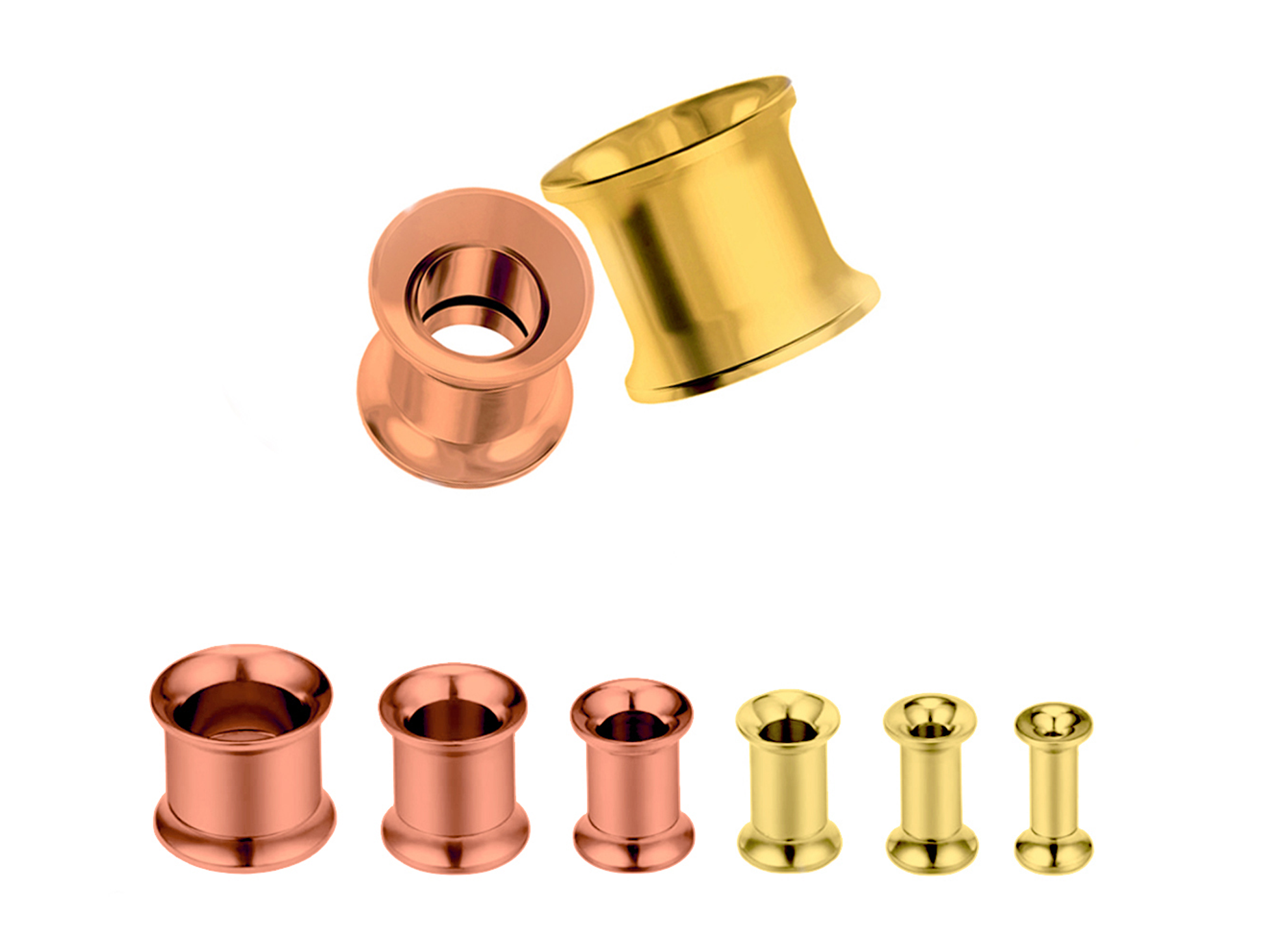
If you have a sensitive ear or a history of reactions to cheap metals, start with implant-grade titanium or 14K gold and check the hallmark or material listing before you buy. Our titanium steel double flare plugs are priced at 10.99.
Frequently Asked Questions
Are handmade products better than mass-produced products?
Not automatically. Handmade jewelry is not inherently more durable than mass-produced jewelry; durability depends on the materials used and how the piece is constructed. Handmade pieces offer more variation, direct contact with the maker and the option of custom work, while mass-produced jewelry usually wins on affordability and convenience. The better choice depends on what you value most: longevity of materials, uniqueness, or price. Pierced and Lovely's 14K gold and implant-grade titanium pieces are hallmarked, so you can check the material yourself.
How can you tell if jewelry is handmade?
Look for small variations between pieces, slightly uneven finishing, visible tool marks that have been polished out, and a maker who can explain how the piece was produced. For gold, check for an official hallmark from an Assay Office in England, which is required on all gold jewelry over 1.0g. Ask the seller whether the piece is made in-house or sourced, and whether custom sizes are possible. Genuine makers usually list weight and materials clearly.
Is handmade jewelry more expensive than mass-produced jewelry?
Usually, yes, because handmade pieces involve more labor and smaller production runs. Price is also driven by weight and metal purity: the heavier the gold, the higher the cost. At Pierced and Lovely, a 14K gold piercing loose part starts at 370.30, a 10K/14K/18K solid gold industrial barbell at 399.00, and a 14K solid gold belly button ring at 426.00. Titanium and surgical steel plugs are far less expensive, starting at 9.99 and 10.99.
Does handmade jewelry last longer than mass-produced jewelry?
Not necessarily. Longevity depends on the materials and construction rather than the production method alone. Pierced and Lovely states that its plugs are vacuum plated with a lifetime guarantee, and that piercings must be fully healed before changing jewelry.
