
Last Updated: October 23, 2026
Quick Summary
14k gold hypoallergenic depends on its alloy composition, not just purity. Since 14k gold contains 58.3% pure gold and 41.7% other metals like nickel, copper, and zinc, nickel-free 14k gold is better tolerated than standard 14k gold, though no gold is truly hypoallergenic.
- 14k gold contains 58.3% pure gold and 41.7% alloy metals, with nickel being the primary allergen.
- Nickel-free 14k gold is meaningfully better tolerated than standard 14k gold for sensitive skin.
- Yellow 14k gold (nickel-free) is typically the safest choice; white gold often contains nickel.
- Implant-grade titanium is the safest option for fresh piercings and severe metal allergies.
- Solid gold is safer than gold-filled or gold-plated because there's no base metal to expose.
Table of Contents
- Is 14K Gold Safe for Piercings?
- What Makes 14K Gold Hypoallergenic: Gold Purity and Alloy Composition
- Can 14K Gold Contain Nickel?
- Yellow, White, and Rose Gold: How Color Affects Allergy Risk
- Hypoallergenic Metals for Earrings and Other Piercings
- 14K Gold vs. Implant-Grade Titanium for Piercings
- Identifying and Managing Metal Allergies
- Solid Gold, Gold-Filled, and Gold-Plated: What's the Difference?
- Practical Tips for Safe Jewelry Choices
- Frequently Asked Questions
Is 14K Gold Safe for Piercings?
Whether 14k gold is safe for piercings depends on what makes 14k gold hypoallergenic, and the answer isn't as straightforward as the karat number alone. At Pierced and Lovely, we've worked with customers who've had reactions to jewelry labeled "gold" and others who've worn 14k pieces without issue for years.
The short answer: 14k gold can be safe for piercings, but only if you understand what's actually in the alloy. Not all 14k gold is created equal. The metal you're putting in a fresh or healed piercing matters far more than the marketing on the box.

This guide breaks down the science of gold composition, explains why karat matters, and shows you how to identify jewelry that won't trigger a reaction. By the end, you'll know exactly what to look for when shopping for pieces that work with sensitive skin.
What Makes 14K Gold Hypoallergenic: Gold Purity and Alloy Composition
The term "hypoallergenic" gets thrown around in jewelry marketing, but it's misleading. No gold is truly hypoallergenic, what matters is the alloy metals mixed with it. Understanding 14k gold composition is the first step to finding jewelry that won't irritate your skin.
The 58.3% Gold Standard
14k gold contains 58.3% pure gold by weight, with the remaining 41.7% made up of other metals. That 41.7% is where the problem starts. Those alloy metals are what trigger reactions in people with sensitive skin, not the gold itself.

Think of it this way: a 14k gold piece is technically more than half gold, but nearly half of it is something else entirely. For comparison, 18k gold contains a higher percentage of pure gold and proportionally less alloy. The purity difference matters when you're dealing with reactive skin.
The weight of the jewelry also affects its safety profile. Heavier pieces contain more of the total material, which means more exposure to whatever metals are mixed in. A delicate 14k gold labret with minimal weight will expose your piercing to less alloy metal than a chunky 14k gold barbell.
Alloy Metals and Allergenic Risk
The 41.7% of non-gold material in 14k gold typically includes nickel, copper, zinc, and silver. Of these, nickel is the primary culprit for allergic reactions. Nickel is a common allergen, and even small amounts can trigger contact dermatitis in sensitive individuals.
Copper and zinc are generally better tolerated, though some people react to copper. Silver is typically less allergenic than nickel but can still cause problems in rare cases.
A key distinction: nickel-free 14k gold is genuinely better tolerated than standard 14k gold. If a jeweler explicitly states their 14k pieces are nickel-free, they've replaced that nickel with other metals like copper or zinc. This is a meaningful difference.
When you're evaluating 14k gold jewelry, ask the jeweler directly about the alloy composition. Reputable sellers will tell you what's in the metal. If they can't or won't answer, that's a red flag.
Can 14K Gold Contain Nickel?
Yes. Standard 14k gold often contains nickel as part of the alloy blend. This is legal and common in the jewelry industry. Many mass-produced 14k pieces contain nickel because it's inexpensive and creates a workable alloy.
The presence of nickel doesn't mean the jewelry is low-quality, it means it may not be suitable for people with nickel sensitivity. Nickel allergies are among the most common metal allergies, affecting a significant portion of the population (pubmed.ncbi.nlm.nih.gov).
If you have a history of reactions to jewelry, assume standard 14k gold contains nickel unless the seller explicitly states otherwise. Nickel-free 14k gold exists, but you have to specifically request it or buy from jewelers who prioritize nickel-free formulations.
The distinction matters for long-term wear. A piercing exposed to nickel-containing jewelry over months or years can develop a reaction even if you didn't have one initially. Sensitization can happen gradually.
Yellow, White, and Rose Gold: How Color Affects Allergy Risk
The color of 14k gold tells you something about what's mixed in, and different colors carry different allergy risks.

Yellow 14k gold typically contains copper and zinc alongside the gold. Copper is generally well-tolerated, though some people react to it.
White 14k gold is bleached or plated to achieve its pale color. The base alloy often contains nickel to create the white tone. Some white gold uses palladium instead, which is more hypoallergenic.
Rose 14k gold blends gold with copper to create the pink hue. Copper is the dominant alloy metal in rose gold. For most people, this is well-tolerated.
The takeaway: yellow 14k gold (nickel-free) is typically the safest choice for sensitive skin. White gold requires verification that it's nickel-free. Rose gold works well unless you specifically react to copper.
Hypoallergenic Metals for Earrings and Other Piercings
If 14k gold isn't working for you, several metals are genuinely hypoallergenic and suitable for sensitive piercings.
Implant-grade titanium (ASTM F136) is the gold standard for sensitive piercings. It's biocompatible, meaning your body doesn't treat it as foreign material. Titanium doesn't contain nickel and rarely triggers reactions.
Surgical steel is often marketed as hypoallergenic, but the term is misleading. Surgical steel is a stainless steel alloy that usually contains nickel. Unless it's specifically labeled nickel-free, assume it contains nickel.
Platinum is hypoallergenic and safe for piercings, but it's expensive. It's a solid choice if budget allows.
Gold-filled jewelry (not to be confused with gold-plated) offers a middle ground. Gold-filled pieces have a thick layer of gold bonded to a base metal.
14K Solid Gold Labret Lip Piercing -16G & 14G - Body Jewellery for Tragus →
Gold-plated jewelry is generally not recommended for piercings. The plating wears away with time and friction, exposing the base metal underneath. Once exposure happens, reactions often follow.
14K Gold vs. Implant-Grade Titanium for Piercings
This comparison matters because many people assume gold is automatically better. It's not, it depends on your skin and your piercing.
14k gold (nickel-free) is safe for most healed piercings and offers excellent aesthetics. It's warm, luxurious, and works across all skin tones. If you can wear it without reaction, it's an excellent choice. The trade-off: cost.
Implant-grade titanium is the safest choice for sensitive skin and fresh piercings. It's lightweight, durable, and hypoallergenic. Titanium doesn't corrode or degrade in the body, making it ideal for long-term wear.
For people with severe metal allergies, titanium is non-negotiable. For people with mild sensitivity or no sensitivity, 14k nickel-free gold is a better aesthetic choice.
Identifying and Managing Metal Allergies
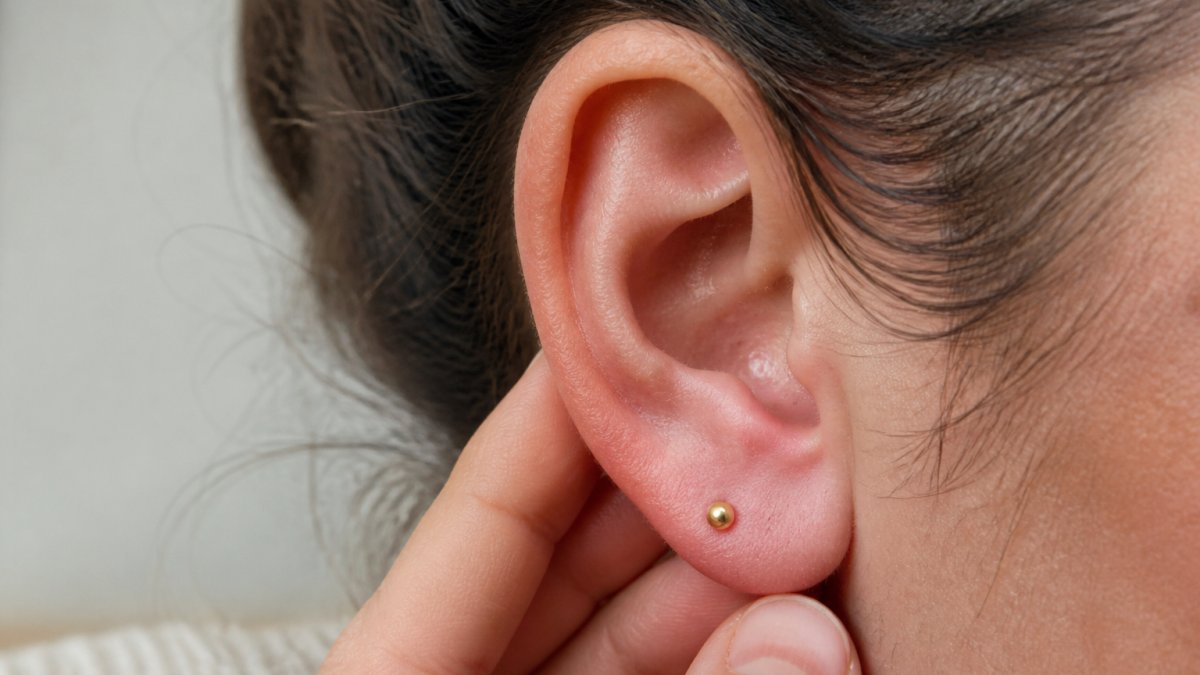
Metal allergies often go undiagnosed because people assume their jewelry isn't the cause. Common symptoms include itching, redness, rash, swelling, and discharge around the piercing site. These symptoms can develop immediately after wearing a piece or gradually over weeks.
The distinction between allergy and irritation matters. Irritation is a reaction to friction, pressure, or trauma, it's not specific to the metal. Allergy is an immune response to a specific metal.
Contact dermatitis from jewelry appears as a localized rash or redness at the point of contact (pubmed.ncbi.nlm.nih.gov).
Identifying which metal you're allergic to requires elimination. If you react to one piece, try a different metal and monitor your skin. If the reaction stops, you've identified a problem metal.
Managing a metal allergy means avoiding the offending metal. If it's nickel, switch to nickel-free gold, titanium, or platinum. If it's copper, avoid rose gold and copper-containing alloys.
Solid Gold, Gold-Filled, and Gold-Plated: What's the Difference?
Understanding these categories helps you make informed choices about safety and durability.
Solid gold means the entire piece is made of gold alloy. A solid 14k gold labret is 14k throughout, from the post to the end.
Gold-filled jewelry has a thick layer of gold (at least 5% of the total weight) bonded to a base metal core. The gold layer is substantially thicker than plating, making it durable for daily wear.
Gold-plated jewelry has a thin layer of gold electroplated onto a base metal. The plating wears away quickly with friction and moisture, exposing the base metal underneath. For piercings, this is problematic because once exposure happens, reactions follow.
For piercings, solid gold is the safest bet if budget allows. Gold-filled is a reasonable alternative if the base metal is verified as nickel-free. Gold-plated should be avoided for piercings you wear regularly.
| Jewelry Type | Gold Content | Durability | Best For | Allergy Risk |
|---|---|---|---|---|
| Solid 14k Gold | 58.3% throughout | Excellent | Daily wear, healed piercings | Low (if nickel-free) |
| Gold-Filled | 5%+ bonded layer | Good | Daily wear, moderate budget | Low (verify base metal) |
| Gold-Plated | Thin electroplated layer | Poor | Occasional wear only | High (base metal exposure) |
Practical Tips for Safe Jewelry Choices
Start with the alloy composition. Before buying any piece, ask the jeweler what metals are in the alloy. If they don't know or won't say, move on.
Request nickel-free certification if you have sensitive skin. Some jewelers test their pieces to verify nickel content. This is a valuable service and worth paying extra for.
For fresh piercings, use implant-grade titanium or solid 14k nickel-free gold. Avoid gold-plated pieces and standard surgical steel.
Keep detailed records of which pieces cause reactions. Note the metal type, how long you wore it, and what symptoms appeared.
Test new pieces on healed piercings first. If you develop a reaction, you can remove the jewelry immediately without compromising a fresh piercing.
When shopping at Pierced and Lovely, we provide detailed material specifications for every piece. Our 14k gold jewelry is hallmarked by the UK Birmingham Assay Office, confirming authenticity and purity.
If you've struggled with jewelry reactions, you know how frustrating it is to find pieces that work with your skin. Our handcrafted collection includes customizable options, so you can get exactly what your piercing needs. View products and discover jewelry that feels as good as it looks.
Frequently Asked Questions
Can 14K gold contain nickel?
Yes, 14K gold can contain nickel depending on the alloy metals used. Since 14K gold is only 58.3% pure gold, the remaining 41.7% consists of alloy metals that may include nickel, copper, or zinc. Nickel is a common allergen, so if you have a nickel sensitivity, ask your jeweler for nickel-free 14K gold or specify white metal alloys like palladium or silver instead. Pierced and Lovely hallmarks all 14K gold over 1.0g at the UK Birmingham Assay Office to verify authenticity and composition.
Is 14K gold safe for piercings?
14K gold is generally safe for healed piercings if the alloy metals do not trigger a reaction. The safety depends on what metals are mixed with the gold, nickel-free 14K gold is better tolerated than alloys containing nickel or other allergens. Higher-karat gold (18K or 24K) contains a greater proportion of pure gold and fewer alloy metals, making it potentially safer for sensitive skin. For fresh piercings, implant-grade titanium is often recommended over gold because it has fewer allergenic metals and is specifically designed for initial healing.
What metals are hypoallergenic for earrings?
The most hypoallergenic metals for earrings include implant-grade titanium (ASTM F136), niobium, and higher-karat gold (18K or above) with nickel-free alloys. Implant-grade titanium is hypoallergenic because it contains no nickel and is biocompatible, making it ideal for sensitive ears and fresh piercings. Nickel-free 14K gold and higher-karat gold are also suitable options. Avoid metals that commonly cause reactions: nickel, base metals, and low-quality plated jewelry where the plating wears away to expose allergenic metals underneath.
How do I know if I'm allergic to gold jewelry?
A gold allergy is actually a reaction to the alloy metals, not the gold itself. Symptoms include itching, redness, rash, or swelling around the piercing or contact area. The reaction typically appears within hours to days of wearing the jewelry. To identify the cause, remove the jewelry and see if the irritation clears. If it does, the metal was likely responsible. Contact dermatitis from jewelry usually appears as a localized rash where the metal touches skin. If you suspect a metal allergy, switch to nickel-free 14K gold, higher-karat gold, or implant-grade titanium and monitor your skin for improvement.
